

Doors and gates are the entry points of energy and people into the house .Therefore it is very important to fix doors in the proper direction of the house. In ancient Vaastu Shastra two types of doors have been defined; one is called Maha dwaar( gate ) which is the door fixed at the boundary walls of the house and the other type of door is called Mukhya dwaar (main door) which is the door of the house. Again the placements of both gates and doors with respect to each other have been further classified in four types.
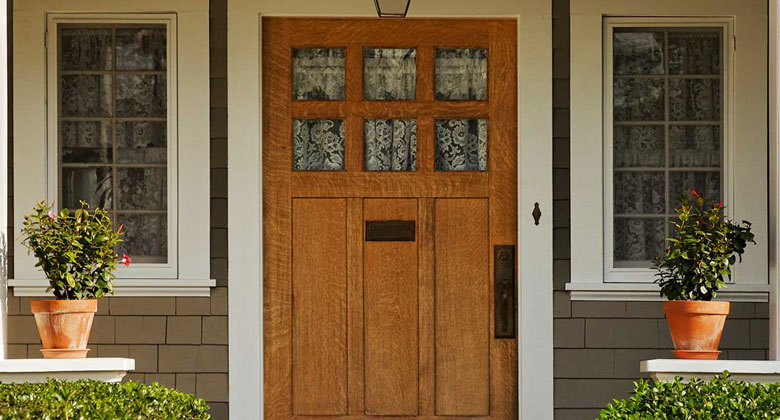
- Utsang dwaar; when Maha dwaar and Mukhya dwaar are placed in the same line facing each other. This combination is known as Utasng dwaar and is the best combination of doors.
- Savya dwaar; when Mukhya dwaar is located in the right side of Maha dwaar while entering into the house is called Savya dwaar .This arrangement of doors is next to Utsanga dwaar in terms of its benefits.
- Apsavya dwaar; this is formed when Mukhya dwaar is located in left of the Maha dwaar while entering into the house .This is not very good combination of both the doors .
- Prishthbhang Kshar; is the worst among all the above door combinations as this is formed when the entry into the house is made from behind the house whereas Mukhya dwaar is situated in the front.
So it is always advisable to make this combination as auspicious as possible while constructing the house and choosing the door combinations.
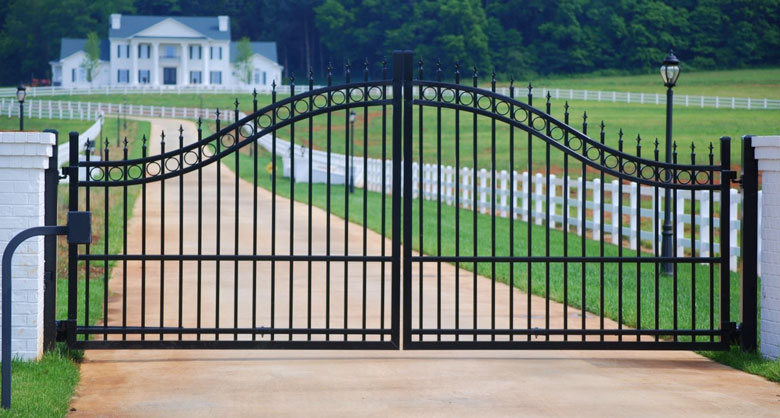
However, there are certain specific parts of the boundary wall which are most suitable for making Maha dwaar (gates) in a house. This can be understood by dividing the total length of one side of the wall in nine parts. This is so because of ruler ship of each part by one deity. Each mythological deity corresponds to some specific effect on the lives of occupants. So total divisible parts of all the four boundary walls come to 32, each corner occupied by one common deity. In ancient Vaastu Shastra each direction has some beneficial parts for constructing gates which have been listed below;
- East; the best parts in the East direction for making gates is 2nd, 3rd, and 4th parts from North,
- North; 3rd, 4th, and 5th parts from West is best for making gates in the North direction,
- West; 3rd, and 4th parts are suitable for making gates in the west direction, and
- In South; 2nd, 3rd and 4th parts are good for making gates in the South direction.
However due to certain compelling reasons if this prescribed location of the gates in any direction is not possible then the use of appropriate colors can bring about respective remedies.
Even the doors in the rooms should also be situated in the North-East corner for the simple reason of making it free from any heavy object in this corner. If that is also not feasible, then the placement of doors in each room should be made in such a way that North-East corner should always be free from heavy articles in addition to application of other Vaastu principles.
Colors of gates in different direction:
If the gates are not placed in the proper direction or corner on the boundary walls then painting of those gates with remedial colors can significantly reduce the ill effects.
- If the gate happens to be in the South side of South-East corner, then the gate should be painted with black color but in case of East face of South-East, it should be painted Red.
- The gates in South-West corner should however be painted with black color because of this corner being assigned to shadow planet Rahu . Even the South-West direction doors in a flat should also be made heavier by putting an additional channel door painted in black.
- Black color should also be applied in case of Western gate of the house.
- North-West gate of a house should be white but for more benefits of this gate, an auspicious planetary combination, Gaj Keshari Yoga can also be formed if we add yellow or Golden Yellow with white color in North-West corner.
- The gates of North-East should be painted in decorative colors Yellow, red, White and Golden so as to make it more vibrant and receptive to the beneficial energies coming into the house.